Intense Pulsed Light (IPL) Therapy for Dry Eye
Intense Pulsed Light (IPL) is an in-office treatment designed to address one of the most common root causes of dry eye: meibomian gland dysfunction (MGD).
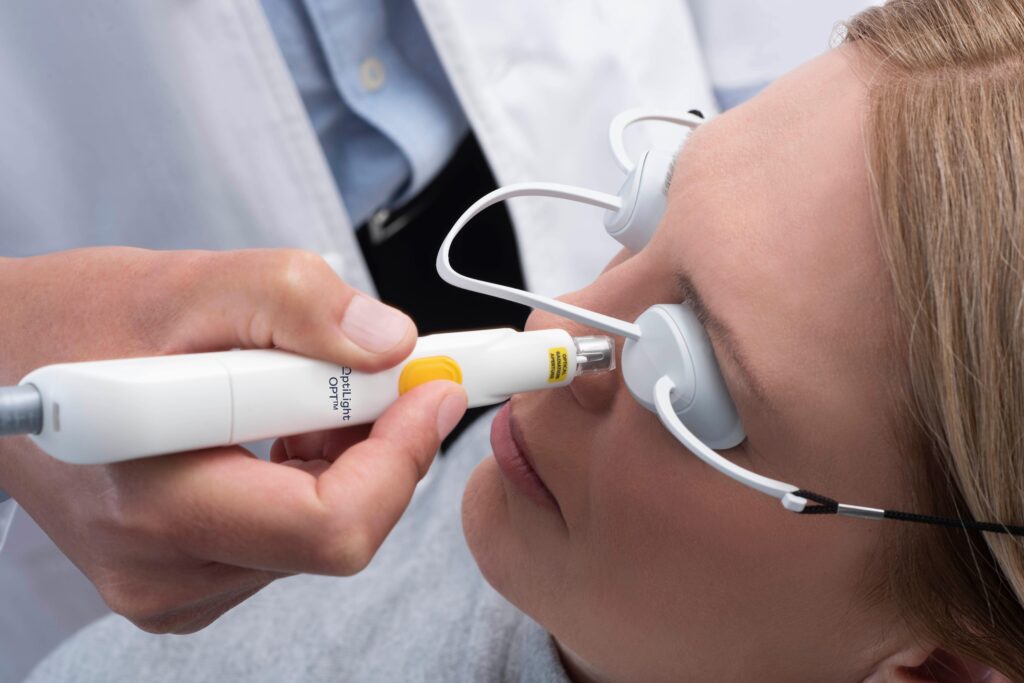
At our clinic, we use the Lumenis OptiLight IPL, the only IPL system that is FDA-approved specifically for the management of dry eye disease. This matters. Not all IPL devices are created or regulated the same way.
The meibomian glands produce the oil layer of the tear film, which prevents rapid tear evaporation. When these glands become inflamed or obstructed, the tear film becomes unstable, leading to dryness, irritation, redness, and fluctuating vision.
Book OnlineHow IPL Works
IPL delivers controlled pulses of light to the skin around the eyes. This light energy is converted to heat, which:
- Softens thickened, stagnant oil within the glands
- Reduces abnormal blood vessels that drive inflammation
- Modulates inflammatory pathways on the ocular surface
This process helps restore a healthier tear film and improve overall gland function.
Why Gland Expression Matters
IPL is not a standalone treatment.
Immediately after each IPL session, the meibomian glands are manually expressed to remove the melted, obstructed oil. This step is critical. Without expression, you are heating blocked glands and leaving the obstruction in place.
Treatment Protocol
At our clinic, IPL is performed as a structured series:
- 4 consecutive treatments
- Spaced 1–2 weeks apart
- Gland expression performed after every session
This approach allows for progressive improvement in gland function rather than a temporary or partial response.
What to Expect
Each session is quick and well tolerated. Most patients notice:
- Reduced redness and irritation
- Improved tear stability
- Less dependence on artificial tears
- Clearer, more consistent vision
This is not about masking symptoms. It is about restoring function.
Maintenance Therapy
Maintenance is highly individualized. Some patients benefit from periodic treatments every few months, while others may go much longer depending on:
- Severity of gland dysfunction
- Inflammatory load
- Screen exposure and lifestyle
- Systemic health factors
Your long-term plan is based on how your eyes respond, not a generic schedule.
Book Online